The Mazatec Healer and the Sacred Mushrooms
For generations, women have worked in quiet relationship with sacred mushrooms.
Not as something to be consumed, but as something to be listened to, approached with care, prayer, and deep respect. These practices were held within lineage, guided by those who understood that what was being touched was not separate from life itself.
In many traditions, this role was carried by women. Not through authority, but through attunement. Through a sensitivity to what could be felt beneath the surface, and an ability to listen in ways that moved beyond words. These spaces were often intimate and protected, where the role was not to lead, but to hold, to witness, and to translate what arose.
The mushrooms were not seen as a tool, but as something sacred. Relationship came first. Trust was built over time, and these encounters were approached with preparation, intention, and care.
It is within this lineage that María Sabina lived and worked.
In the mountains of Huautla de Jiménez, María Sabina became known as a Mazatec curandera, a healer who worked with what she called los niños santos, the holy children. Her relationship with the mushrooms began in childhood, not as a decision, but as something that revealed itself to her. Over time, this connection deepened into a lifelong devotion.
Her ceremonies, known as veladas, were held in darkness and guided through prayer, chant, and deep listening. People came to her not for experience, but for healing, for clarity, and for support in meeting what they could not face alone. Her role was to hold the space as the mushrooms revealed what needed to be seen.
She became known for the way she spoke during ceremony, her words moving in a rhythmic, poetic form that was understood not as her own voice, but as something moving through her. She did not position herself as the source, but as a vessel shaped by years of relationship, discipline, and respect for the work.
As awareness of her work extended beyond her community, the ceremonial use of sacred mushrooms became visible to a wider world. Yet at the centre of it all, her way of working remained unchanged.
She continued with the same devotion, the same discipline, and the same reverence for the relationship she carried. Not for recognition, and not for those seeking experience, but because this was the work she had been given.
Her legacy is often spoken about in connection to the wider awareness of psilocybin, but this only touches the surface.
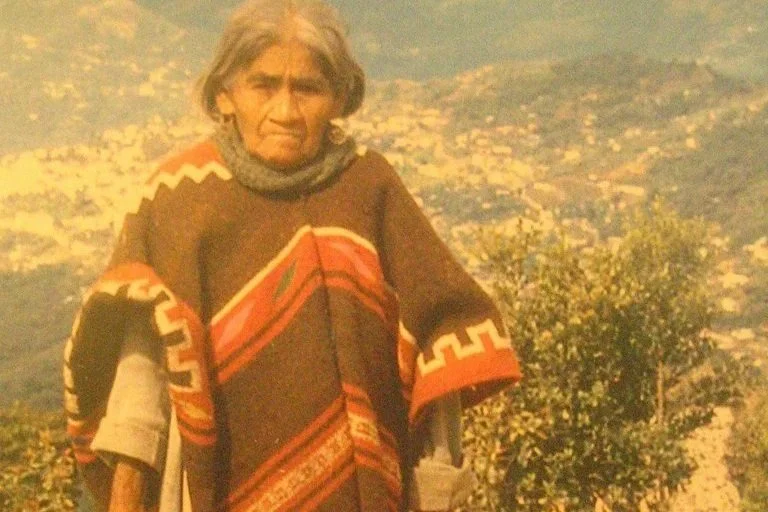
Her life is a reminder that these practices come from somewhere. That they are held within cultures, lineages, and ways of seeing that cannot be separated from the work itself. And that to engage with them is not simply to experience, but to enter into relationship.
For women today, her story is not something to replicate, but something to remember.
A remembering that this work is not about seeking more, but about listening more deeply. Not about reaching outside of yourself, but about softening enough to hear what is already within.
In a world that moves quickly and often looks outward, her way calls us back to something quieter. To preparation. To intention. To the space that is held before, during, and long after the experience itself.
Not to follow her path,
but to walk your own with the same awareness.
To slow down.
To listen.
To trust what is already within you.
Because the most important guide you will ever meet is not outside of you.
It is the one you are learning to hear.