How Psychedelics Were Made Illegal
There was a time when psychedelics were not hidden.
In the 1950s and early 60s, substances like psilocybin were being studied in clinical settings, explored by therapists, and taken seriously within scientific research. There was curiosity. There was openness. And there was a growing sense that these compounds might hold real potential for understanding the mind.
But something shifted.
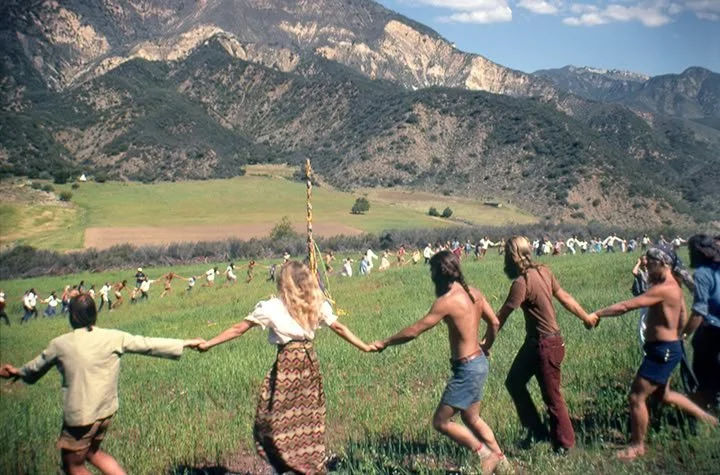
As psychedelics began to move beyond laboratories and into wider culture, they became entangled with something much larger than science. What started as research slowly found its way into the hands of a new generation, one that was questioning authority, rejecting war, and seeking alternative ways of living.
This was the rise of the counterculture movement.
Psychedelics became associated with the “hippies,” with anti-establishment voices, with protest, and with a broader cultural shift that challenged existing power structures. At the same time, the United States was deeply involved in the Vietnam War, and political tension was rising.
In this climate, psychedelics were no longer seen as neutral substances.
They became symbolic.
And that symbolism made them a target.
In 1970, under President Richard Nixon, the Controlled Substances Act was introduced, placing psilocybin into Schedule I. This classification defined it as having a high potential for abuse and no accepted medical use, effectively halting research and restricting access for decades.
It marked a turning point.
Scientific inquiry was paused. Public perception shifted. What had once been explored with curiosity became framed through fear.
And what began in the United States did not stay there.
Through international agreements and a growing global alignment on drug policy, countries around the world began adopting similar positions. Australia was no exception. Rather than forming an entirely independent stance based on its own research, it followed this broader shift, classifying psychedelics within the same restrictive frameworks.
In many ways, the narrative travelled faster than the science.
What was shaped by politics and cultural tension in one country became policy in many others, including here in Australia. Over time, access was restricted, research slowed, and public understanding became influenced more by stigma than by evidence or lived experience.
Later, one of Nixon’s own advisors, John Ehrlichman, reflected on this period, stating that the war on drugs was, in part, a way to disrupt anti-war groups and counterculture movements. Whether viewed as strategy, reaction, or political control, the impact was clear. Psychedelics were removed from mainstream research and placed into the margins.
For decades, their potential remained largely unexplored within formal systems.
And yet, they were never entirely lost.
Quietly, outside of institutions, therapists, researchers, and practitioners continued to hold the knowledge. Small pockets of work persisted, often without recognition, keeping the thread alive.
Now, more than half a century later, that thread is being picked up again.
Research has returned. Universities are studying psilocybin once more. Clinical trials are exploring its role in mental health, from depression to trauma to addiction. Even here in Australia, there are early signs of change, with limited clinical use now permitted in highly controlled settings.
This is not about rewriting history.
It’s about seeing it more clearly.
Psychedelics did not become illegal purely because of what they are. They became illegal within a specific cultural and political moment, shaped by fear, misunderstanding, and the need for control.
And now, as that narrative begins to soften, a new one is emerging.
Not one grounded in rebellion, but in responsibility.
Not one driven by reaction, but by integration.
Not a return to the past, but a continuation of something that was never fully finished.